
Why Seating Is the Foundation of Productivity
Research consistently shows that physical discomfort is one of the biggest killers of focus and output. When an employee spends their day shifting in an ill-fitting chair, battling lower back pain, or losing concentration to the dull ache of poor posture, their cognitive performance takes a measurable hit. The solution isn’t complicated — it’s ergonomic.
Ergonomic office chairs are engineered around the human body. They support the spine’s natural curve, reduce pressure on the hips and lower back, and allow for subtle postural shifts throughout the day. Features like adjustable lumbar support, seat depth control, and articulating armrests mean the chair works with your body rather than against it.
The result? Employees who can think clearly for longer, stay focused without distraction, and leave at the end of the day without the fatigue and pain that drain motivation and commitment.
The Lumbar Support Difference
Ask any physiotherapist and they’ll tell you the same thing: the lower back is the most vulnerable part of the body during prolonged sitting. Without proper support, the lumbar spine rounds outward, placing enormous strain on the discs, muscles, and ligaments surrounding it. Over time, this leads to chronic pain, sick days, and reduced performance.
A quality lumbar support office chair addresses this directly. Whether through a fixed lumbar pad or a fully dynamic system that adjusts to movement, this single feature is often the difference between a chair someone dreads sitting in and one they genuinely look forward to using.
When evaluating seating for your workspace — whether for a private office, an open-plan floor, or a hot desking setup — lumbar support should be non-negotiable.
Hot Desking and Flexible Workspaces: Getting the Seating Right
Hot desking has become the backbone of the modern hybrid office. Rather than every employee owning a fixed desk, workers rotate through available workstations as needed. It’s cost-effective, space-efficient, and increasingly popular with organisations managing fluctuating headcounts.
But hot desking solutions only work when the seating is right. If someone sits down at a shared workstation and can’t quickly adjust the chair to suit their body, the entire system breaks down. This is where highly adjustable, premium ergonomic chairs earn their keep.
The best chairs for hot desking environments offer:
• Wide height adjustment ranges to accommodate different body types.
• Tool-free lumbar and armrest customisation.
• Durable construction built for frequent use.
• A clean, professional aesthetic that suits shared environments.
When your team can customise their setup in under a minute, hot desking stops being a compromise and starts being a genuine advantage.
Private Offices: Where Premium Seating Makes the Biggest Statement
For those with dedicated private offices, the chair becomes something more than functional furniture. It’s a daily companion, a signal of professionalism, and a direct contributor to how someone performs hour after hour.
Executives, consultants, creatives, and analysts who spend eight or more hours at a desk understand this intuitively. A poorly designed chair is a tax on productivity paid in discomfort and distraction. A premium ergonomic chair, by contrast, disappears into the background — allowing full attention to go where it matters.
Private office seating should reflect the quality of the work being done inside it. Features to look for include multi-dimensional armrests, breathable mesh or premium upholstery, forward tilt mechanisms for focused tasks, and synchronised recline for moments of reflection.
Meeting Rooms and Boardrooms: Seating That Supports Decision-Making
The conversation around ergonomic seating often focuses on individual workstations, but boardrooms and meeting rooms deserve equal attention. Long strategy sessions, client presentations, and team workshops demand chairs that keep participants alert and engaged rather than shifting uncomfortably in their seats.
A well-designed meeting room chair should offer enough comfort for extended use without becoming so reclined it signals disengagement. Slim profiles, sturdy bases, and professional aesthetics matter here — but so does spinal support and seat padding that holds up across a two-hour session.
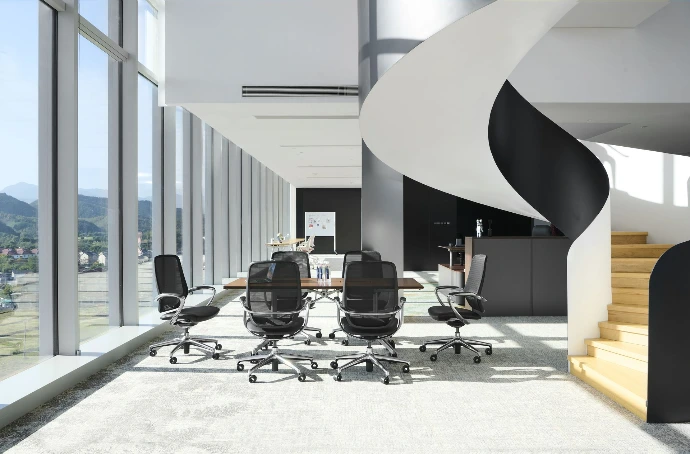
Flexible Workspace: Designing for the Way People Actually Work
The most forward-thinking organisations are no longer designing offices around fixed habits. They’re creating flexible workspace ecosystems — zones for focused individual work, areas for collaboration, breakout spaces for informal conversation, and private offices for confidential work.
Seating plays a different role in each of these zones. Task chairs with full ergonomic adjustment belong at individual workstations. Comfortable lounge seating creates inviting breakout areas. Versatile conference chairs serve collaborative spaces. Getting the right chair into the right environment is what separates a thoughtfully designed workplace from one that simply looks the part.
This is why working with a specialist supplier — one who understands both the functional and aesthetic demands of modern offices — makes all the difference. Whether you’re fitting out a single private office or a multi-floor flexible workspace, every chair in your building is either helping your team perform or quietly holding them back.
The Bottom Line
Designing workplaces for the future means taking seriously the things that have always mattered: comfort, support, and the ability for people to do their best work without physical barriers getting in the way.
Ergonomic office chairs, thoughtfully chosen for each environment — from hot desking floors to private offices to executive boardrooms — are one of the highest-return investments any business can make. The evidence is in the output, the wellbeing scores, and the simple fact that people stay longer and work better when they’re not in pain.
Are you ready to upgrade your workspace? Explore our premium range of ergonomic office chairs, hot desking solutions, and private office furniture — designed for the way modern businesses really work.