
The Chair You Ignore Is the One That Costs You Most
Most professionals think carefully about the tools they use: the laptop they carry, the software they subscribe to, the desk they choose. Yet the one object that supports the human body for the majority of the working day is often selected with the least consideration.
An office chair is not a passive piece of furniture. It is a daily intervention in your physical health, your concentration, and the quality of the decisions you make. Getting it right matters more than most people realise.
What Does Ergonomics Actually Mean?
The word "ergonomics" appears on nearly every office chair listing available today, but it is frequently misused. True ergonomic design is grounded in human factors research: the science of designing tools and environments to fit the natural capabilities and limitations of the human body.
In a workplace context, this means a chair that accommodates the natural curvature of the lumbar spine, allows the feet to rest flat, positions the hips at an appropriate angle, and supports the arms at a height that prevents shoulder and neck strain. These are not luxury considerations. They are functional requirements for a body that spends hours in a seated position.
Research published in occupational health literature consistently notes that poorly designed seating contributes to musculoskeletal discomfort, particularly in the lower back, neck, and shoulders. The relationship between sustained awkward posture and discomfort is well established in the field of ergonomics, even if the precise degree of risk varies significantly by individual, task, and working pattern.
The Difference Between a Budget Chair and a Premium Chair
A budget chair might hold the body upright. A premium chair is engineered to support it dynamically across a full day of varied activity.
The difference lies in several areas.
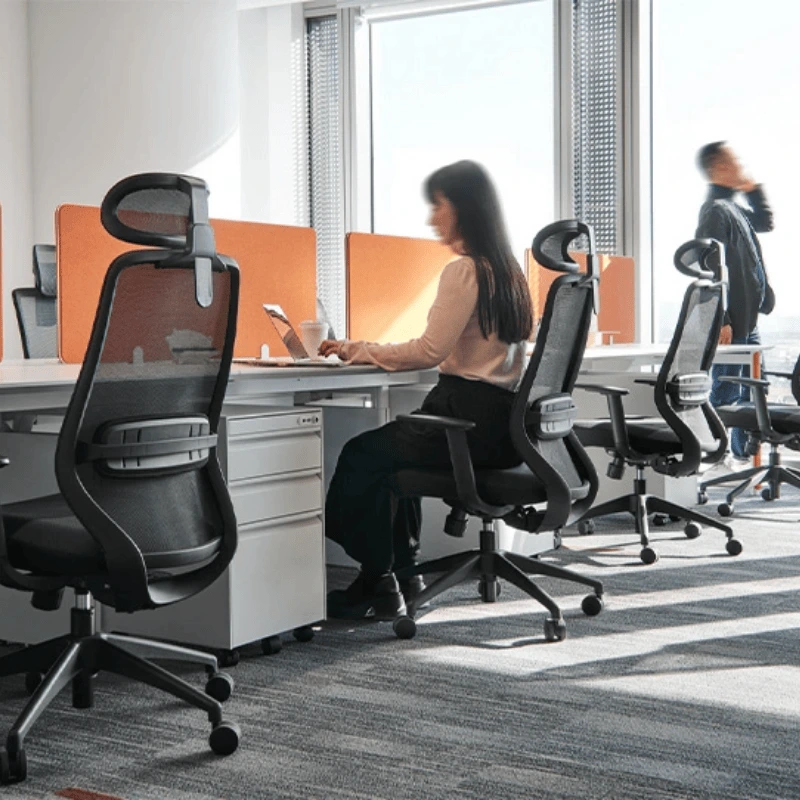
Adjustability is perhaps the most significant. A high-quality office chair will offer nuanced control over lumbar depth and height, seat depth, armrest position, tilt tension, and recline angle. These adjustments exist because no two bodies are identical, and no two working days involve the same postures. A chair that cannot be tuned to the individual is simply less useful, regardless of how it looks.
Material quality follows closely. The structural components of a premium chair, typically the base, the mechanism, and the frame, are constructed to withstand years of use without degrading in performance. The seating surface, whether upholstered in fabric, mesh, or leather, should breathe appropriately, resist compression over time, and remain comfortable during extended sessions.
Mesh seating in particular has gained significant traction in the premium market. Its open-weave structure promotes airflow across the seating surface, which reduces heat and moisture buildup over long periods. For those who work intensively and remain seated for extended blocks of time, this is a meaningful functional benefit rather than a cosmetic one.
Does Your Chair Affect Your Focus?
There is a reasonable body of evidence suggesting that physical discomfort disrupts cognitive performance. When the body is uncomfortable, attention is diverted toward the source of that discomfort. This is not a marketing claim; it reflects basic principles of how the nervous system directs focus.
Reducing physical distraction through appropriate postural support creates conditions in which concentration can be sustained more naturally. Whether this translates into measurable productivity gains will depend on the individual, the nature of the work, and many other variables. But the principle is sound: comfort is not indulgence. It is a precondition for effective work.
What to Look for When Choosing a Premium Office Chair
When evaluating chairs at the premium end of the market, there are several criteria worth examining carefully.
Look for independent certification. Chairs that carry certifications from recognised testing bodies have been subjected to load testing, durability assessments, and material safety evaluations. This provides assurance beyond marketing language.
Assess the lumbar support mechanism specifically. Fixed lumbar pads are a starting point; adjustable lumbar support that can be repositioned both vertically and in depth is significantly more versatile and more likely to fit your anatomy.
Consider warranty terms. A manufacturer confident in the longevity of their product will typically offer a warranty of ten years or more on structural components. This is a reliable signal of build quality.
Finally, where possible, sit in the chair before purchasing it. Ergonomics is individual. A chair that performs well in testing and earns strong reviews may still not be the right fit for your body and your working style. Time spent in the chair before committing to it is time well spent.
The Chair as a Long-Term Asset
The best office chairs are not expensive. They are long-term assets in the truest sense. Amortised over a decade of daily use, the cost per day of a premium chair is modest. The cost of chronic discomfort, compromised focus, or time spent away from work due to preventable physical strain is far greater.
Investing in the chair you sit in every day is, quite simply, one of the most rational decisions a working professional can make.